2025-ongoing
Subtropical Ghosts and Memory Potions
Beginning with Ilex paraguariensis (yerba mate), Subtropical Ghosts and Memory Potions explores the ecological, cultural, and colonial histories embedded within a single plant.
Developed in collaboration with Camila Chebez and Danuka Ana Tomas, the project follows yerba mate across Argentina and Switzerland, tracing how its cultivation, circulation, and everyday rituals reveal interconnected stories of landscape, migration, extraction, and memory.
Rather than treating yerba mate as a research subject alone, we approached the plant as an active collaborator whose material qualities, ecological context, and social rituals shaped the direction of the project. Working across artistic research, ethnobotany, and material practice, we investigated how making with the plant could generate new ways of engaging with its histories while fostering more reciprocal relationships with the living world.
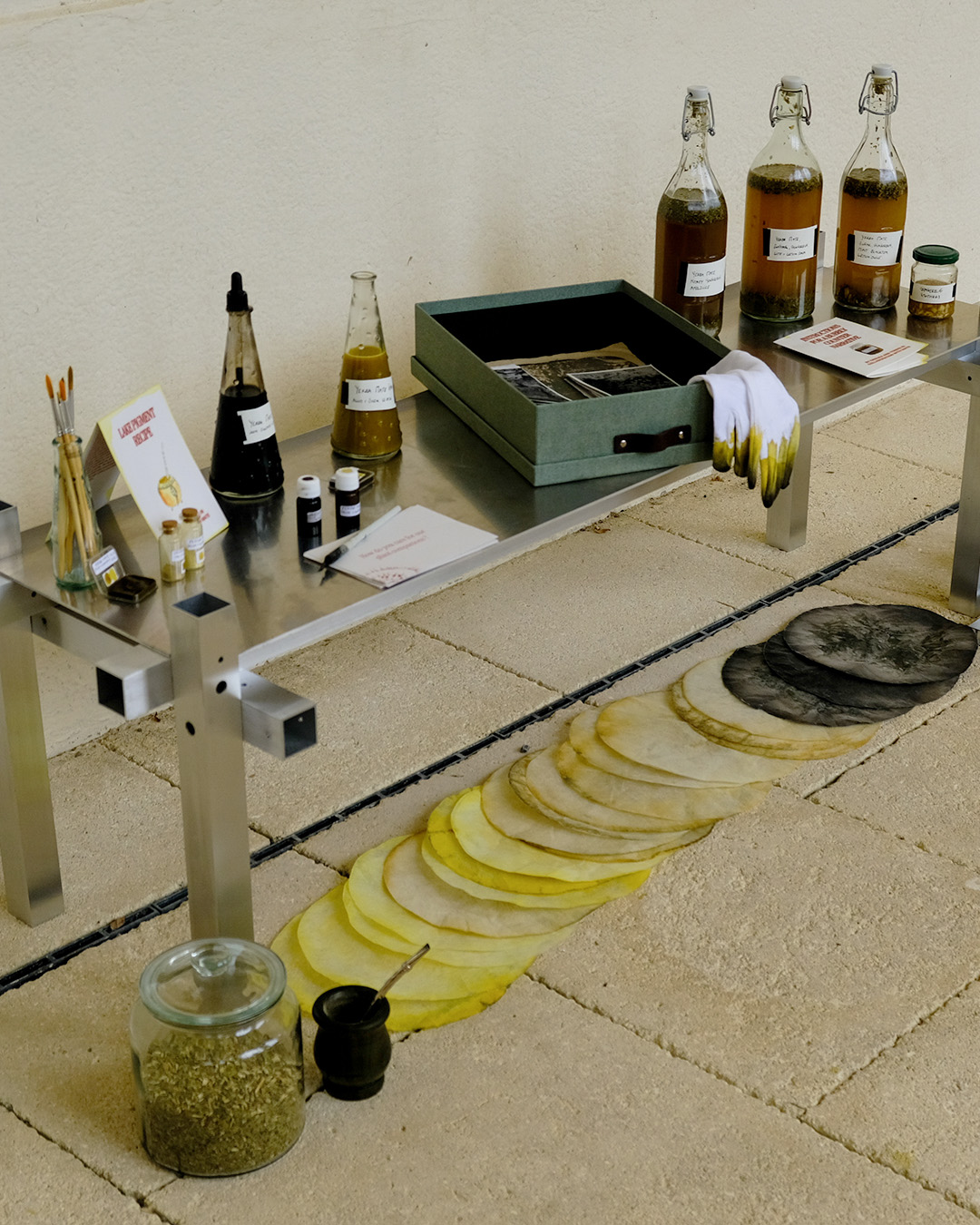
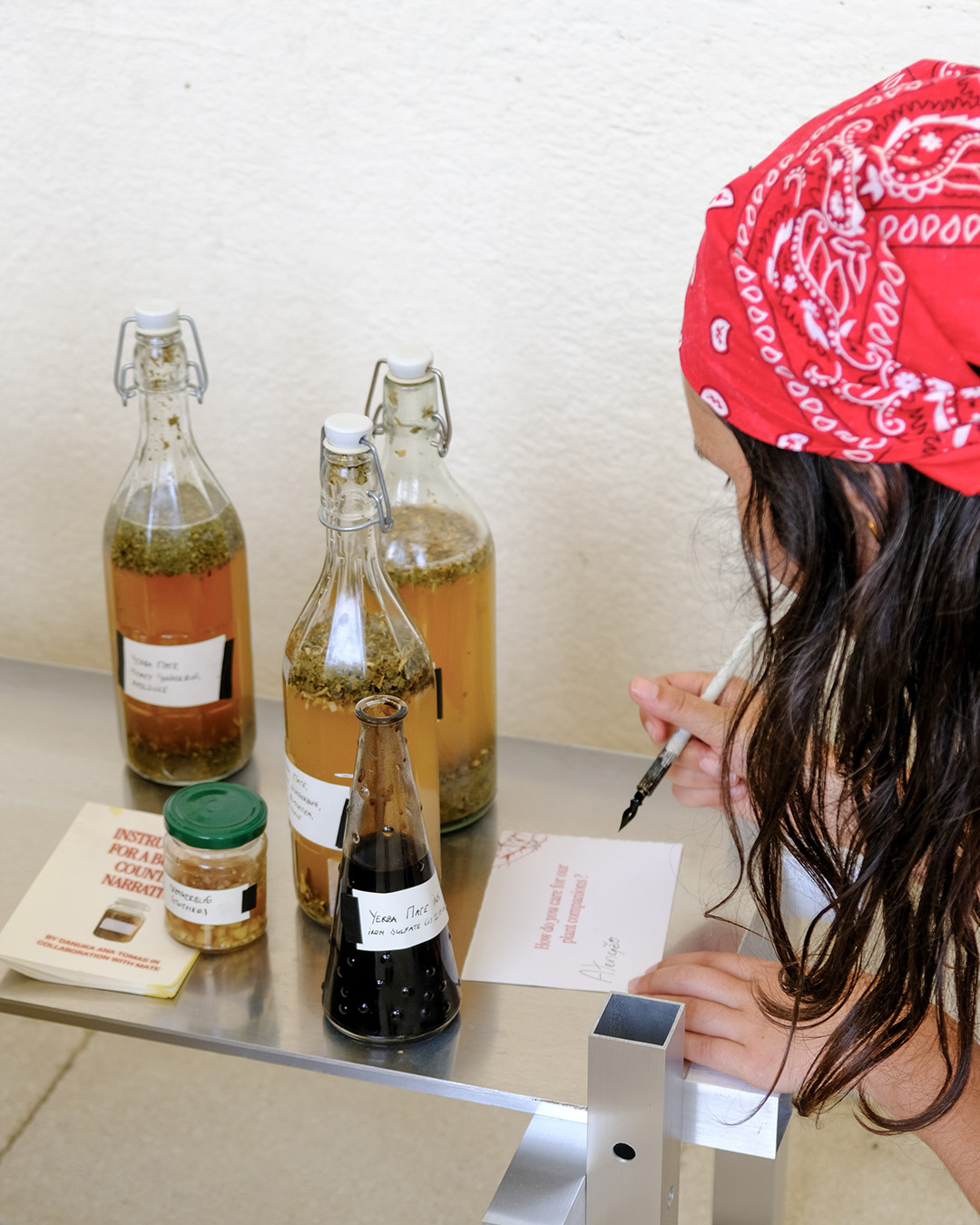
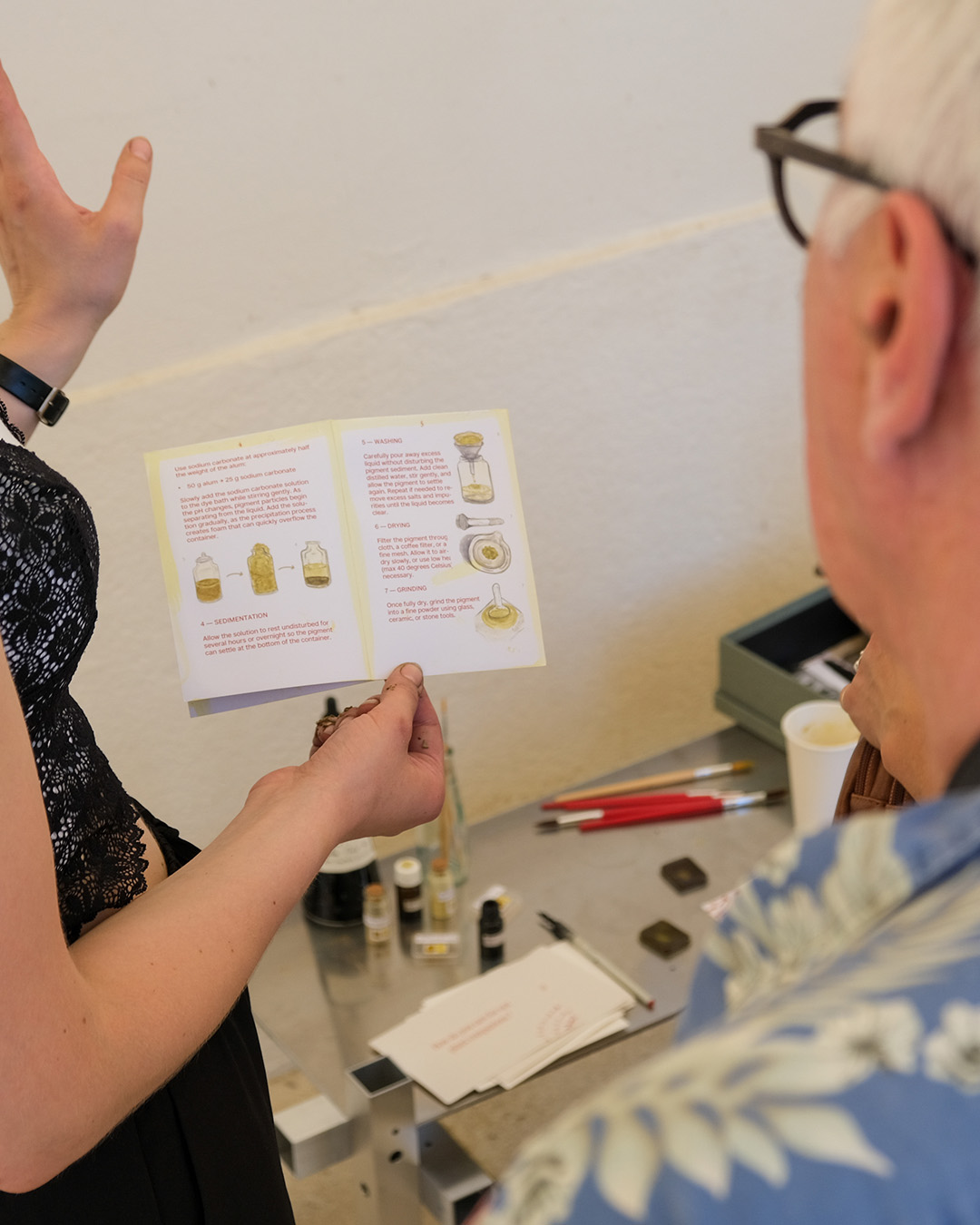
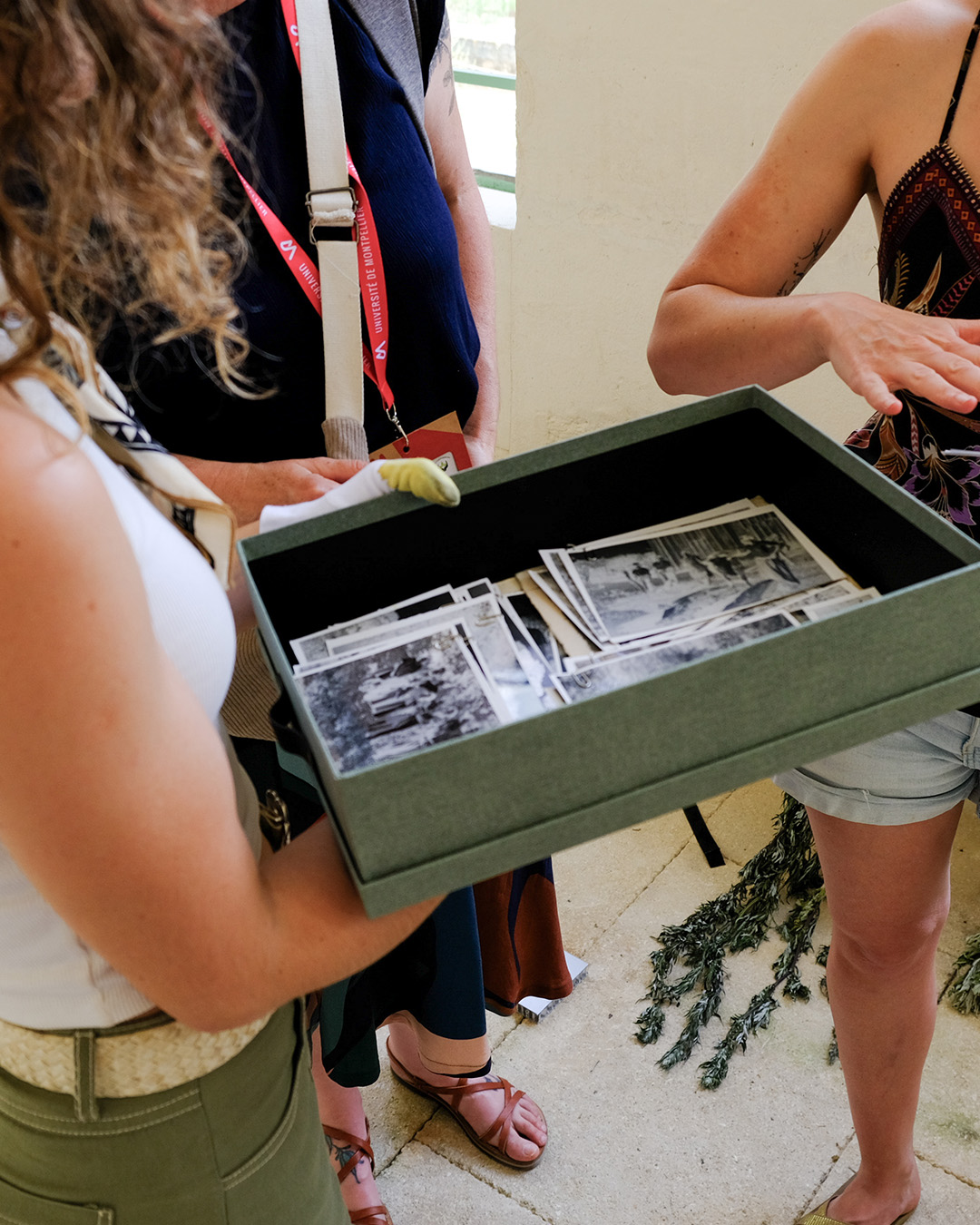
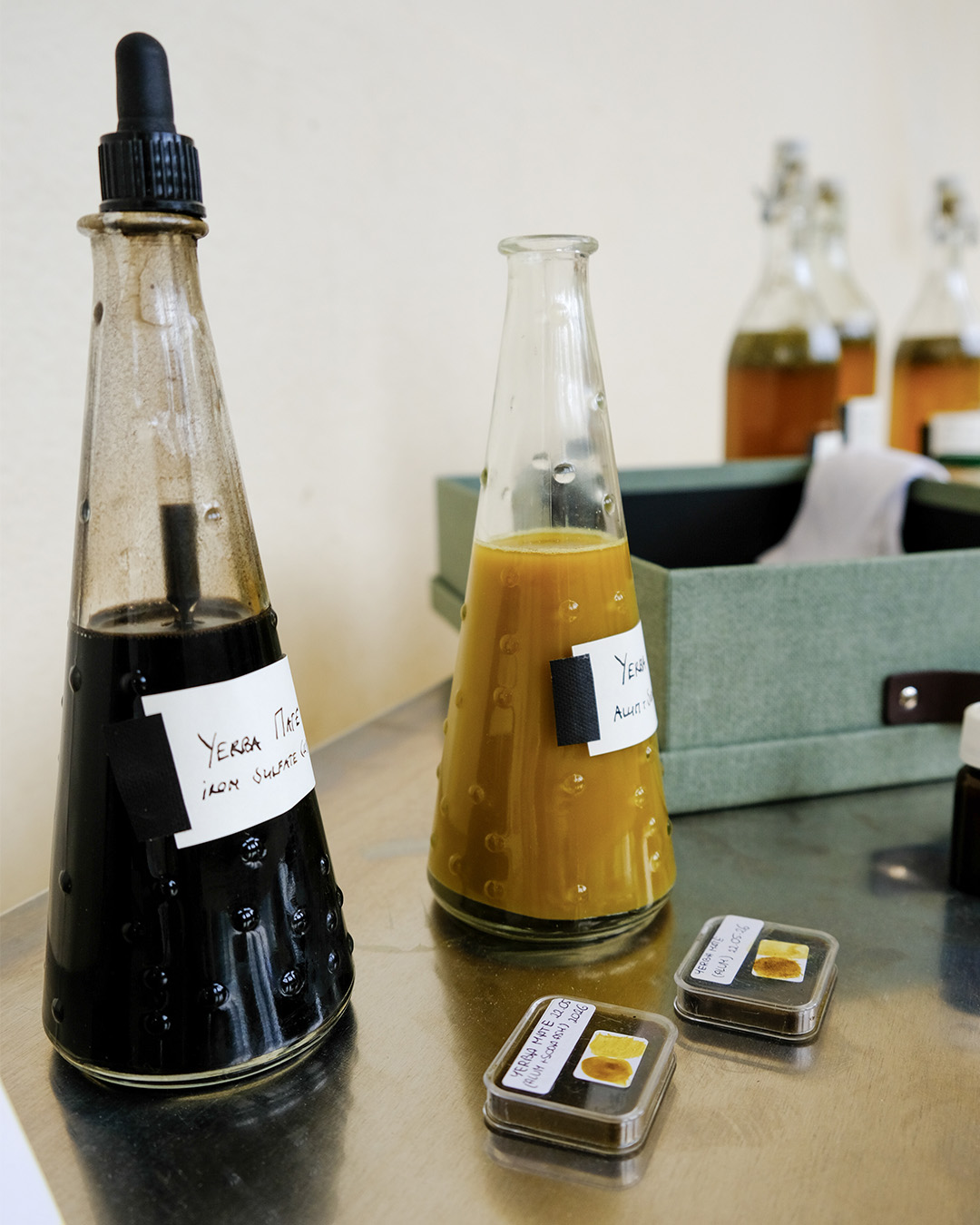
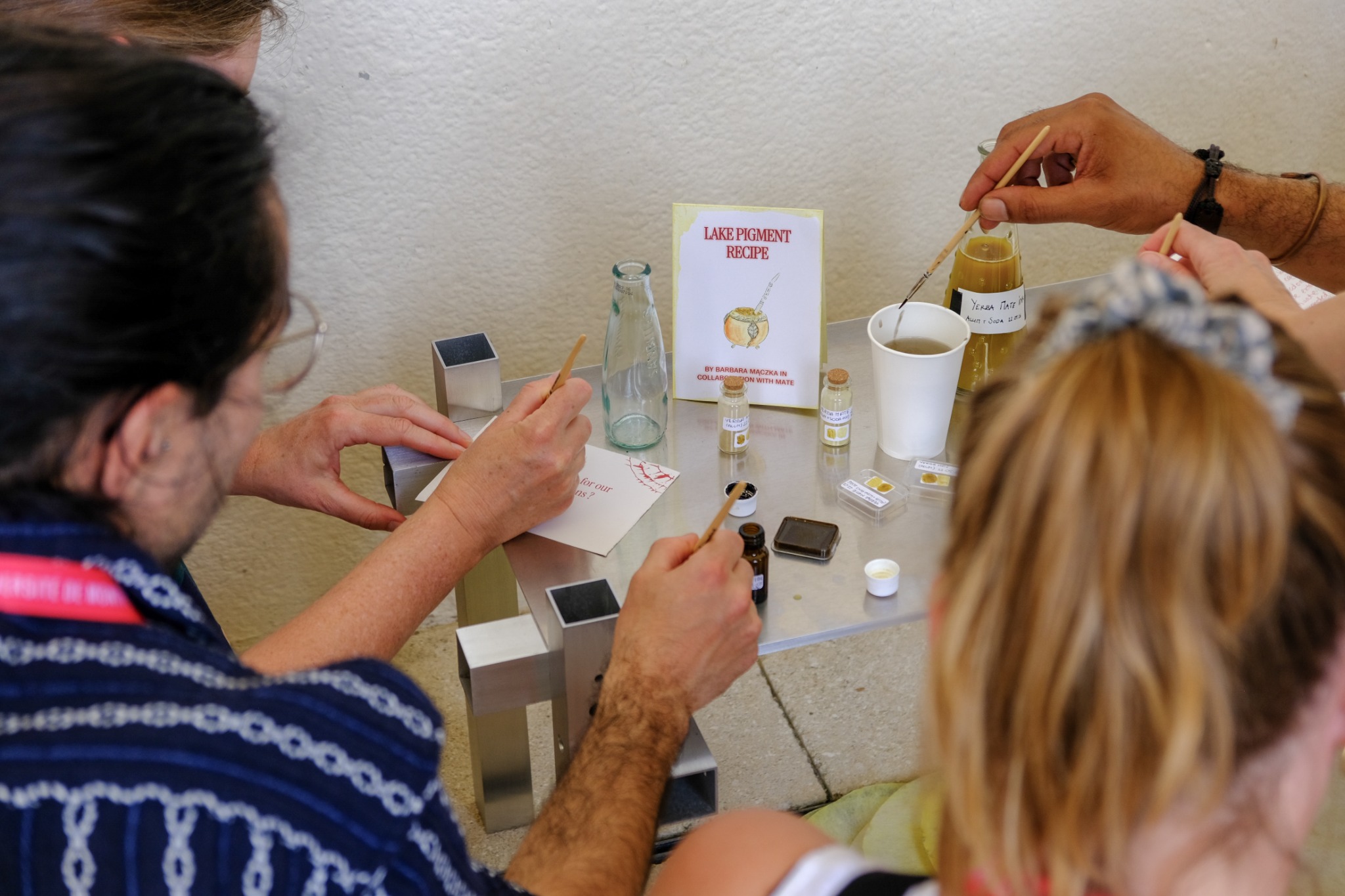
The project culminated in an installation presented during the Undisciplined Ethnobotany conference in Montpellier. Visitors encountered handmade pigments and inks produced from yerba mate leaves, botanical materials, archival photographs, printed matter, and material experiments that reflected the ecological and cultural trajectories of the plant. Alongside these explorations, we developed naturally fermented sparkling drinks using a ginger bug culture, extending the ritual of sharing mate into a collective sensory experience. Rather than functioning simply as a recipe, the fermentation process became another way of thinking with the plant, inviting participants to engage with yerba mate through taste, time, and microbial transformation.
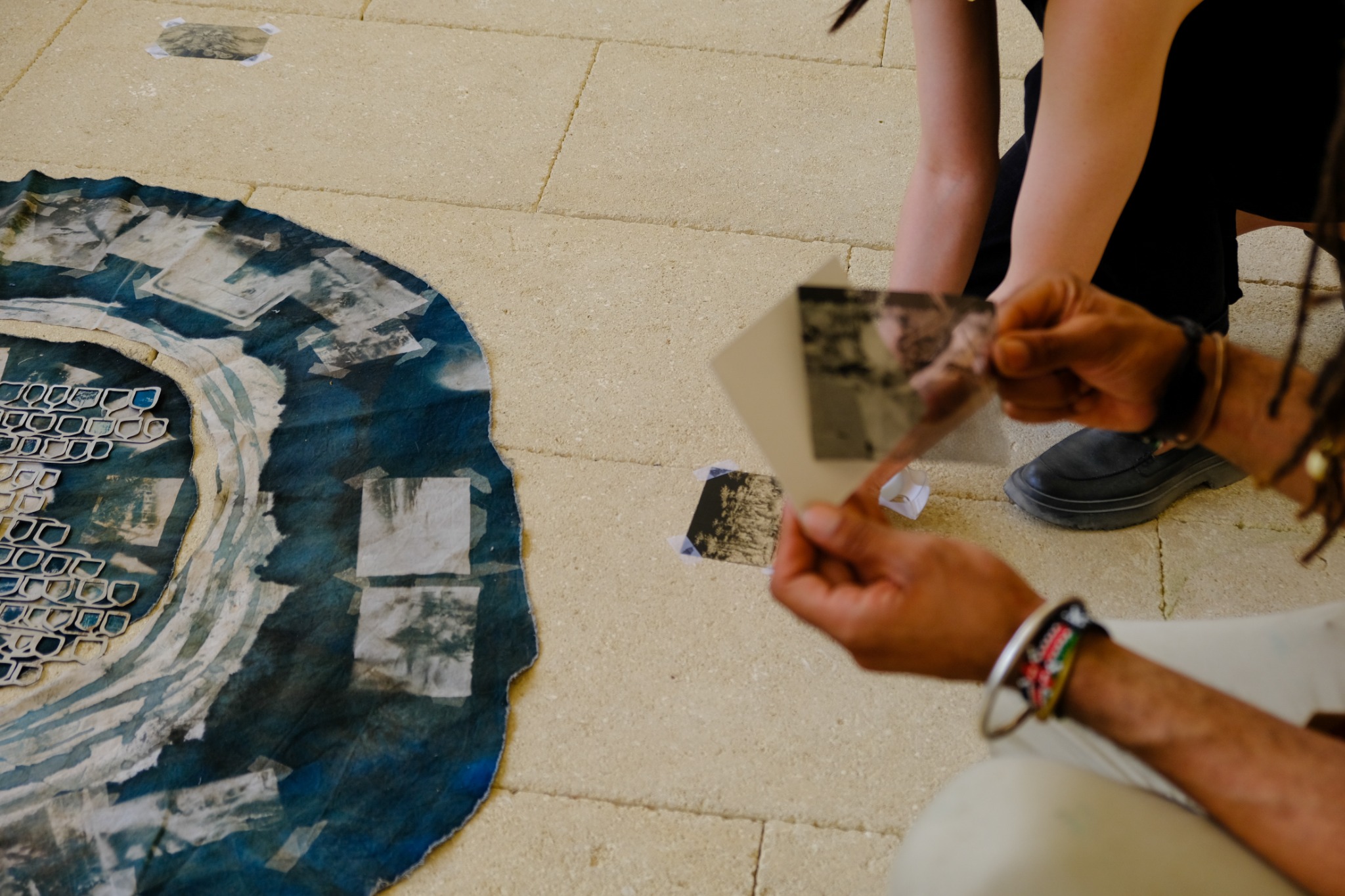
Participants also created cyanotypes using archival photographs connected to yerba mate landscapes and histories. Through this slow photographic process, historical images were transformed into new collective artefacts, opening conversations about memory, disappearance, landscape, and the traces that plants leave across generations and territories.
Together, pigment-making, fermentation, cyanotype, and publishing offered distinct ways of engaging with yerba mate-as colour, as living culture, as light-sensitive archive, and as shared knowledge. By approaching the plant through multiple material practices, the project invites participants and readers alike to reflect on how artistic research can cultivate more reciprocal relationships between people, plants, and the intertwined ecological and cultural histories they embody.